

DEX SPAC3D: Walk Through an Idea Before It Exists
The future of marketing isn't just about creating better ideas. It's about creating better ways to experience them.
For a long time, presenting an event concept has relied heavily on imagination. A creative team develops the vision, designers translate it into 3D renders, and production teams explain how it will eventually come together. The client is then presented with images, floor plans and slides, and asked to imagine what it will feel like to stand inside the finished space.
It works, but it also asks the client to do something surprisingly difficult: imagine the future.
At DEX, we have been exploring what happens when technology takes some of that imagination out of the equation. What if, instead of simply showing someone a 3D render of an event, we could let them walk through it?
From Visualisation to Experience
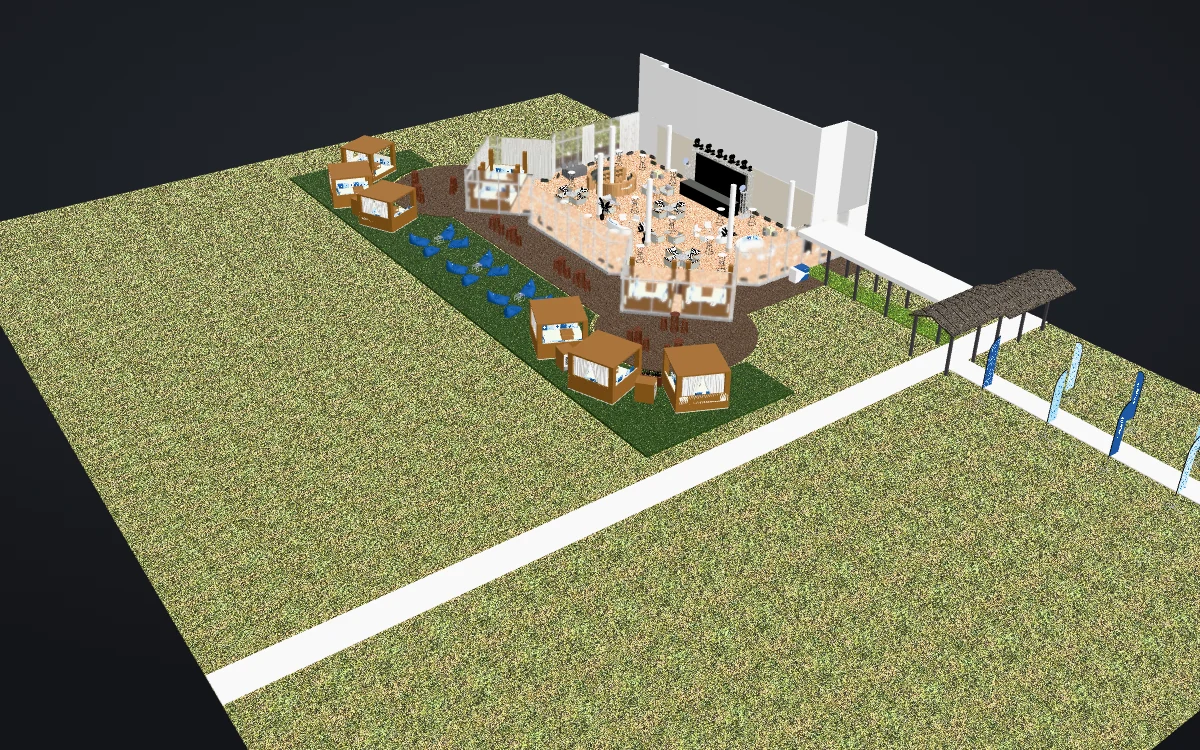
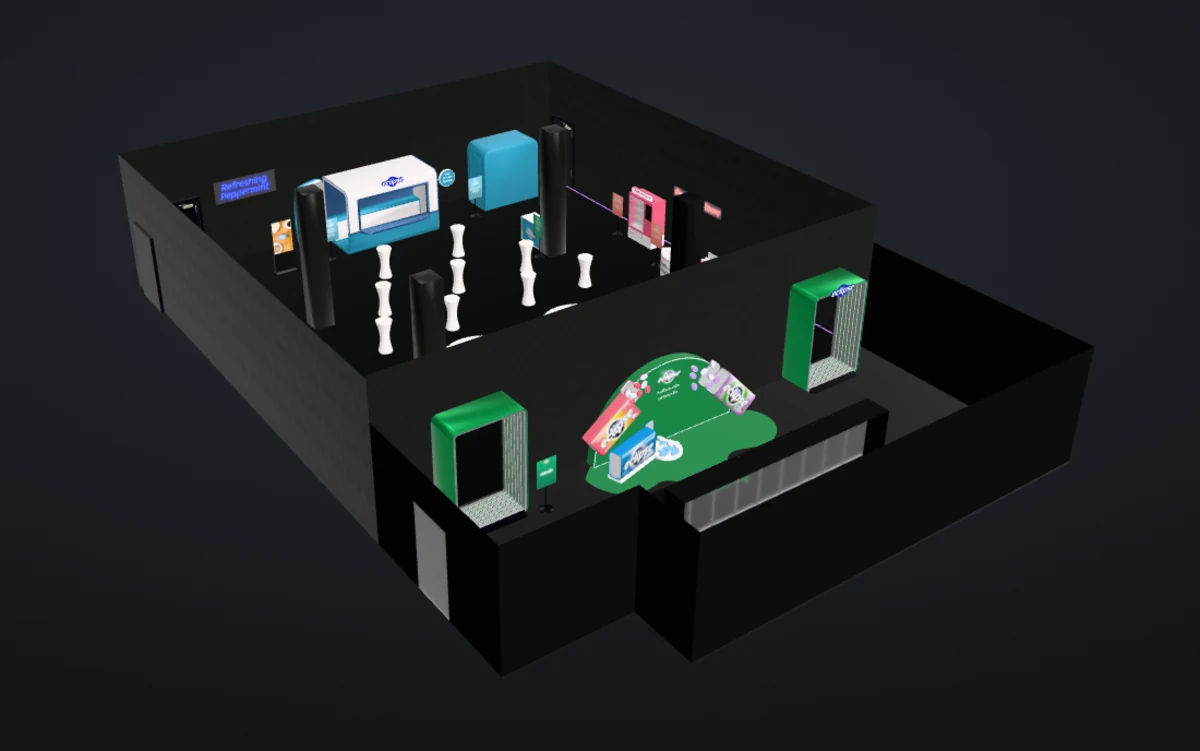
We recently developed a capability that transforms static 3D event environments into interactive, first-person walkthroughs. We call it DEX SPAC3D. Instead of viewing an event from a fixed perspective, clients can enter the digital environment and move through it as if they were physically there. They can walk towards the stage, explore an activation area, understand the scale of a structure and experience the space from different perspectives.
It takes something that was traditionally a visualisation and turns it into an experience.
A static image tells you what something looks like. A walkthrough starts to tell you what it feels like to be there.
This is particularly relevant to experiential marketing because events are inherently spatial and dynamic. People don't experience them from a single camera angle. They walk through them, discover different environments, encounter brands and experience scale, atmosphere and flow. A static render can communicate the creative intent beautifully, but it cannot always communicate the complete experience.
Interactive 3D begins to close that gap. Try DEX SPAC3D for yourself below.
The Agency Is Becoming a Technology Company
This is part of a much bigger shift happening across marketing. Technology used to sit around the edges of the agency, with creative, strategy, production and technology operating as relatively distinct disciplines. Increasingly, those boundaries are disappearing.
Technology can now be embedded directly into how an idea is conceived, developed, presented and experienced. AI can accelerate creative development. Data can inform strategy. Automation can transform workflows. Digital platforms can extend physical experiences. Interactive 3D can allow clients and audiences to experience ideas before they become physical.
The technology itself isn't the product. The technology is becoming part of the capability.
That distinction is important to DEX. Our ambition isn't to build technology for technology's sake. It is to use technology to make marketing more tangible, intelligent, efficient and effective. The opportunity lies in bringing technological thinking into how marketing problems are solved, rather than treating technology as something that only comes into play after the creative work is finished.
From Selling the Idea to Letting People Experience It
Marketing has traditionally been very good at showing people things: campaign visuals, storyboards, videos, moodboards and presentations. But the closer we get to experiential marketing, the more limited a static representation can become.
An event is fundamentally about movement and interaction. People walk through it, discover things, turn corners, encounter brands and experience spaces from constantly changing perspectives. So why should we expect a static image to fully communicate a dynamic experience?
The 3D walkthrough allows the client to move from being an observer of the concept to becoming a participant in it.
That changes the conversation. Instead of simply asking whether a client likes a particular render, teams can discuss what happens when a structure is moved, what an audience will see when they enter, whether an area feels too enclosed, or how the stage looks from different positions.
The conversation becomes more tangible because everyone is interacting with the same environment. For creative teams, that can lead to more meaningful feedback. For clients, greater confidence. For production teams, a clearer understanding of the intended experience.
The technology doesn't replace the creative thinking. It gives the creative thinking somewhere to live.
And This Is Only the Beginning
The most exciting part of DEX SPAC3D isn't necessarily the walkthrough itself. It is what could happen next.
Once an event exists as an interactive digital environment, different layouts could be explored, alternative creative directions tested and attendee journeys simulated before significant production resources are committed.
Over time, AI could become part of that environment itself, helping users navigate the space, answer questions, recommend changes or even generate alternative concepts based on specific objectives.
The digital model stops being simply a presentation asset and becomes a sandbox for experience design.
That is where the opportunity becomes much bigger than 3D visualisation.
Designing for the World That Is Coming
This is ultimately why we are investing in capabilities like this at DEX. The marketing industry is moving into a world where the distinction between physical and digital is becoming increasingly blurred.
The best experiences will not necessarily be purely physical or purely digital. They will increasingly be combinations of both, with technology extending what is possible in the physical world and physical experiences giving technology a more meaningful context.
For us, this is what Technology + Marketing really means. It isn't about putting a technology label on an existing service, or adding AI simply because everyone else is talking about it. It is about asking a more fundamental question:
Can technology fundamentally change how we create, communicate and deliver marketing?
Sometimes the answer is a new platform. Sometimes it is automation. Sometimes it is artificial intelligence. And sometimes it is simply giving someone the ability to walk through an idea that doesn't exist yet.
Because when you can experience an idea before it is built, you don't just make the idea easier to understand.
You make the future a little easier to see.

Stay Ahead
Access specialists, insights and ideas in the field of marketing, creative and technology.


DEX Ventures is a Collaborative Partner of Andersen Consulting.